httpSMS: The Free, Privacy-First Open Source Alternative to Twilio (2026 Setup Guide)
httpSMS is a free, open source, privacy-first SMS API that turns your Android phone into a gateway. A cheap alternative to Twilio and MessageBird with no per-message fees.
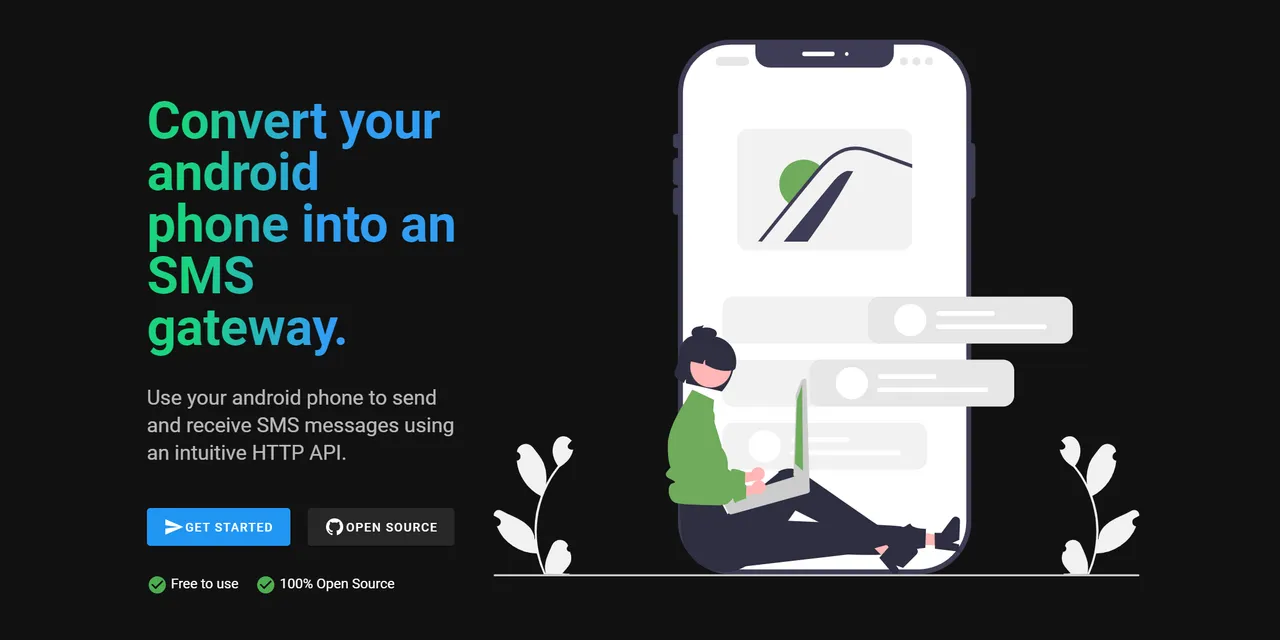
Sending SMS through commercial APIs like Twilio or MessageBird gets expensive fast. You pay a monthly fee for a virtual number, then pay again for every single message you send. For indie developers, small businesses, and privacy-conscious users in the US and beyond, those costs add up quickly.
httpSMS is a free, open source, privacy-first alternative. It turns the Android phone you already own into a fully programmable SMS gateway. No virtual number rentals. No per-message fees. No third party reading your messages. Just your phone, your SIM, and a simple HTTP API.
In this guide, you'll learn what httpSMS is, why it's the cheapest open source SMS service available, and how to set it up from scratch in under 10 minutes.
What is httpSMS?
Built by NdoleStudio, httpSMS is an open source service that transforms a regular Android smartphone into a programmable SMS gateway. Instead of paying a commercial provider for virtual numbers and per-message API fees, httpSMS routes HTTP API requests directly through your phone's existing cellular plan.
The system has two parts: a backend routing server (written in Go) and a lightweight Android app. When you trigger an API request from your website, server, or smart home hub, the backend pushes the command to your phone, which sends the text message using your carrier. It can also receive replies and forward them to your webhooks, making it a cost-effective tool for two-way communication.
Because the entire codebase is open source, you can audit it, self-host it, and never worry about a third party logging your messages. This makes it a strong privacy-first choice for anyone who needs SMS automation without trusting a cloud provider with sensitive communication.
Who is it for?
- Indie developers and makers: Add SMS notifications, 2FA, or alerts to side projects without signing up for expensive commercial SMS plans. If you're looking for a cheap Twilio alternative, this is it.
- Small businesses: Send appointment reminders or local marketing blasts using the unlimited texting plan you already pay for. No API bills at the end of the month.
- IT administrators: Set up an out-of-band alert system (like server downtime notifications) routed through a physical SIM card you control.
- Privacy-conscious users: Get end-to-end encrypted (E2EE) text messaging that bypasses carrier snooping by encrypting the payload before it leaves the device. Because httpSMS is open source, you can audit the encryption yourself and even self-host the entire stack.
What makes httpSMS the cheapest open source SMS service?
- Zero per-message cost: Leverages your mobile carrier plan. If you have unlimited texting (which most US plans include), your API messaging is essentially free. Compare that to Twilio's per-message pricing and monthly number rental fees.
- Smart rate limiting: Sending hundreds of automated texts at once triggers carrier spam filters. httpSMS has a built-in queue system that paces messages (for example, one message every 20 seconds) to keep your SIM safe and your messages delivering.
- Real-time webhooks: Automatically forwards incoming SMS messages to your server, Slack, Discord, or Zapier via callback URLs. Build two-way SMS workflows without a middleman.
- Privacy-first by design: Built-in AES-256 encryption ensures that even the server routing the messages cannot read their contents. Only the designated devices hold the decryption keys. This is something commercial providers like Twilio cannot offer, since their servers process your messages in plain text.
- Fully open source: The entire codebase is on GitHub. You can audit it, fork it, and self-host it on your own infrastructure for complete data sovereignty.
What you need before you start
- Hardware: An Android smartphone (Android 8.0 or higher) with an active SIM card.
- Carrier plan: A mobile plan with a generous or unlimited SMS allowance.
- Network: The Android phone must maintain a steady Wi-Fi or cellular data connection to receive API commands from the server.
- Account: A free account on the hosted httpsms.com platform, or a Linux server with Docker if you prefer to self-host the Go backend entirely.
Step-by-step installation
Step 1: Generate your API key
For the easiest setup, use the hosted community version. If you are deploying the backend on your own server, complete your Docker setup first.
- Go to httpsms.com and create a free account.
- Open your Settings dashboard.
- Generate a new API Key. Save it somewhere safe; you will need it for both the Android app and your code.
Step 2: Install the Android companion app
The Android app acts as the bridge between the API and your phone's SMS hardware.
- On your Android phone, download the latest APK from the GitHub releases page: github.com/NdoleStudio/httpsms/releases
- Install the app (you may need to allow installation from unknown sources).
- Open the app and grant the required permissions (SMS read/write and Contacts).
- Log in by pasting the API Key you generated in Step 1.
Step 3: Disable Android battery optimization
To make sure your phone doesn't fall asleep and miss API requests, you must disable battery optimization for the httpSMS app.
- Go to your phone's Settings > Apps > httpSMS > Battery.
- Set the usage to Unrestricted.
Step 4: Send your first SMS via the API
With the phone connected and listening, you can now trigger a text message from any terminal or application using a simple HTTP POST request.
curl --location --request POST 'https://api.httpsms.com/v1/messages/send' \
--header 'x-api-key: YOUR_API_KEY_HERE' \
--header 'Content-Type: application/json' \
--data-raw '{
    "from": "+15551234567",
    "to": "+15559876543",
    "content": "Hello from the httpSMS API!"
}'
Replace the from number with your actual Android phone number, and the to number with the destination.
Common errors and how to fix them
| Error | What it means | How to fix it |
|---|---|---|
| 401 Unauthorized | The server rejected your API request. | Verify that your x-api-key header is correctly formatted and that you haven't included trailing spaces. |
| Messages stuck in "Queued" | The API received the request, but the Android phone is not retrieving it to send via the cellular network. | Your phone is either disconnected from Wi-Fi/data, or Android OS killed the background app. Disable battery optimization for httpSMS and open the app to force a sync. |
| Carrier spam block | Your messages fail to deliver, or your carrier temporarily suspends your texting capability. | You are sending automated messages too quickly. Use the built-in rate-limiting feature in the dashboard to pace your outbound texts. |
httpSMS vs Twilio and other commercial SMS APIs
| Feature | httpSMS (open source) | Twilio / MessageBird (commercial) |
|---|---|---|
| Pricing model | Free API, uses your phone's SMS plan | Pay per message + monthly number rental |
| Phone number | Your real, physical SIM number | A leased virtual VoIP number |
| End-to-end encryption | Supported natively (AES-256) | Not available; provider can read logs |
| Privacy | Open source, self-hostable, auditable | Closed source, cloud-only, provider has access |
| Hardware requirement | Requires a dedicated Android phone | None, 100% cloud-based |
| Best for | Low-volume, privacy-first, budget projects | High-volume, enterprise scale |
Bottom line: If you're paying Twilio or MessageBird for SMS and sending fewer than a few thousand messages a month, httpSMS can replace them for free. It's the cheapest open source SMS service available, and the privacy-first encryption means no third party ever sees your messages. For high-volume enterprise use cases, a commercial API still makes sense, but for indie developers, small businesses, and anyone who values privacy, httpSMS is the clear winner.
3 alternatives worth checking out
- TextBee (textbee.dev): A very similar open-source SMS gateway for Android. TextBee offers a slightly simpler setup process and a clean dashboard for managing multiple devices, making it a strong direct competitor if you are building an offline messaging hub.
- Gotify (gotify.net): If you don't actually need to send SMS messages, but simply want to push notifications from your server to your Android phone, Gotify is an incredible self-hosted push notification server that doesn't rely on cellular text plans.
- Twilio (twilio.com): The enterprise standard. If your application needs to send tens of thousands of messages an hour, a physical Android phone will not suffice. Twilio offers massive scale, reliability, and international compliance, though it comes at a premium cost.
Found this guide useful? Check out more open source projects and free tools for developers on Sudo Scout.
Related posts
Prime Agent: The Self-Improving AI Coding Agent With Persistent IPython and Built-In Subagents (2026 Guide)
Prime Agent is a free, open source self-improving RLM agent for coding and long-running autonomous tasks. Persistent IPython, built-in subagents, continual harness refinement, daemon-backed sessions. 15.8K stars.
NVIDIA Switchyard: Route LLM Traffic Across Models and Providers Without Changing Your API (2026 Guide)
NVIDIA Switchyard is a free, open source Rust proxy that routes LLM requests across providers. Translates between OpenAI and Anthropic APIs, supports Claude Code and Codex, A/B benchmarking, cost optimization. Apache 2.0.
Needle 2: The 14MB AI Model That Runs on Phones, Wearables, and Smart Home Devices (2026 Guide)
Needle 2 is a free, open source 45M-parameter foundation model for tool calling on tiny devices. 14MB binary, 28MB RAM, runs fully offline. LoRA fine-tuning, confidence gating, structured extraction. 5.4K stars.